
Shankha
Modern architecture is increasingly stoic and masculine, but slip into the ancient streets of Khajuraho and see eroticism immortal turned into stone, descend into the depths of a stepwell and enter into womb like curves, cross the threshold of a temple and emerge into the garbha Griha. Sacred and traditional architecture in India was not only feminine but dripping with sensuality. The Raat ki Rani vine on the building, or the banyan’s embrace in a courtyard was equally part of the sensory experience as the brick and mortar itself, entwined limbs and hand carved eternal kisses were a common sight to our ancients. How did we forget? How can we remember?
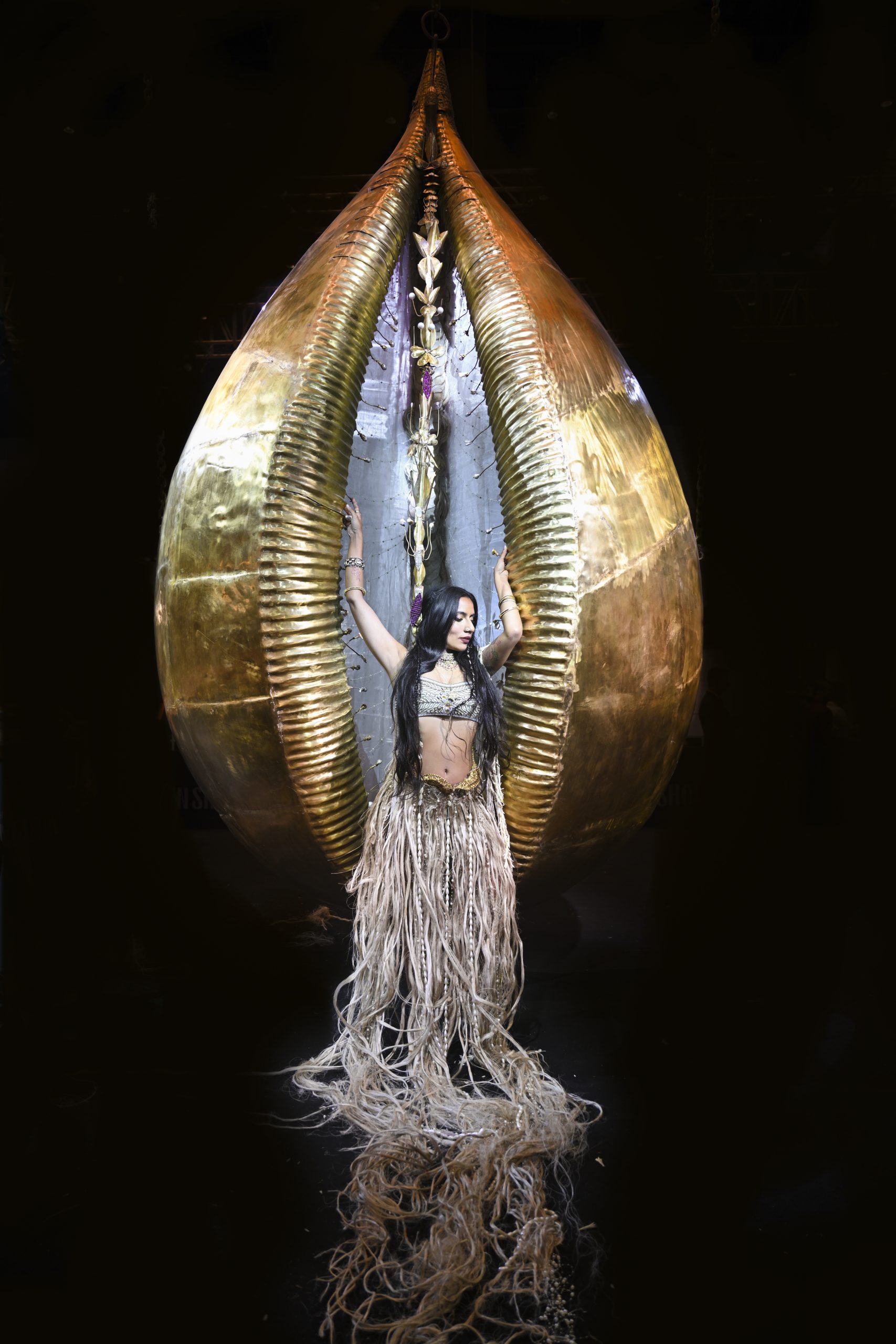
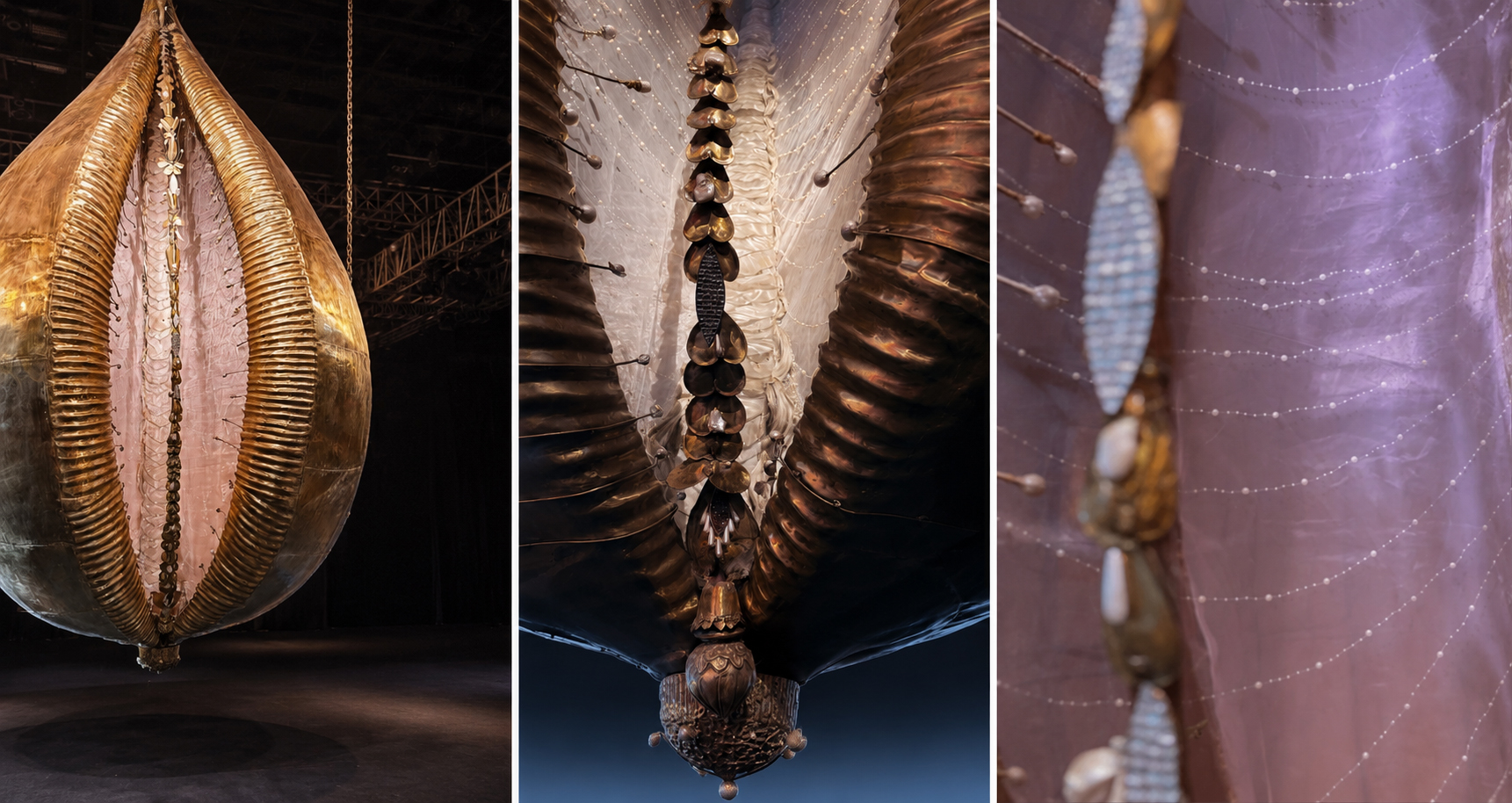
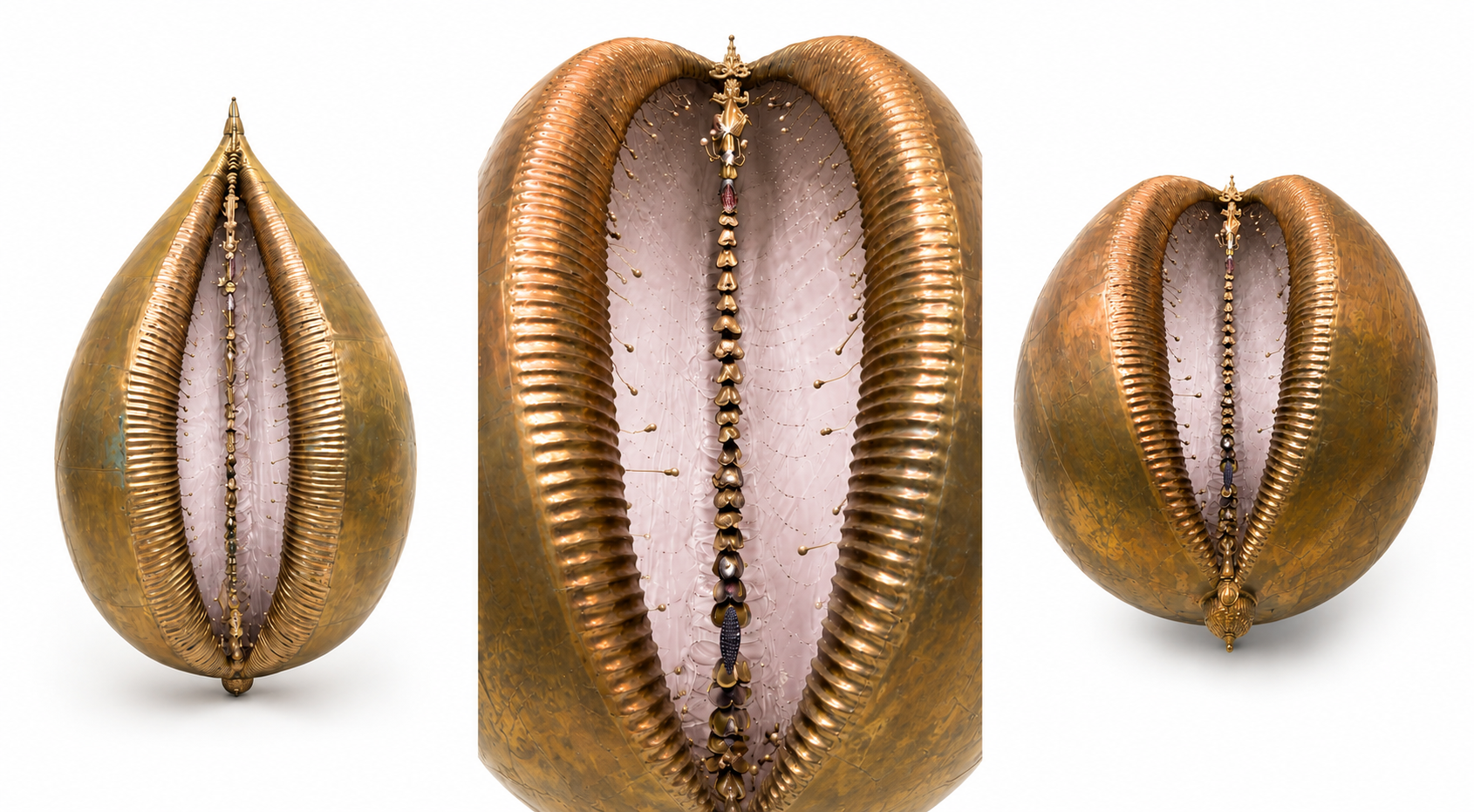
Through Shankha, Shilo Shiv Suleman reclaims the sensuality of India’s architectural past- creating one larger than life brass sculpture of a cowrie shell that acts as an object of worship in the centre of the design fest. Treated like a sacred object, the piece could double down as a contemporary performance piece- with a procession doing a sound consecration at the sculpture everyday symbolic of the human interaction that makes spaces sacred.
The cowrie shell in India was considered a valuable measure of trade and economic sustenance, a charm worn by the Banjara community to ward off dark spirits, and a symbol of feminine emergence , fertility and from the Samudra Manthan. It represents the theme – India and the world, but also stands as a symbol for an unabashed sapphic earth feminine.
Dimensions of the piece: 14ft x 8.23ft, depth 7.2ft